
Searching Sunflower County Criminal Dockets
Sunflower County Circuit Court hears the felony prosecutions. Its Circuit Clerk keeps the criminal filing record. The clerk's official services notice states plainly that no web-based record search exists. No online payment is offered, either. So a written request, not a name search box, is the practical starting point for a Sunflower County Circuit criminal docket. A weekly public judge calendar can point to a hearing. It is still no substitute for the clerk-held record.
Help the office route your request. A case number helps when you have one. No local format is published, though, so none is assumed here. Name the court level. Say the record is criminal. Give an approximate filing or decision range. State whether you want the docket sheet, an order, a judgment, or some other named document. A narrow description lets the Sunflower County clerk quote the proper work and copy charge.
- Identify whether the matter is a Sunflower County Circuit, Justice, or municipal criminal case.
- For a Circuit record, write down the case number if known, date range, document type, and whether plain or certified copies are needed.
- Send the request by email, mail, or in person through the Circuit Clerk’s stated route.
- Ask for the current fee before sending payment and retain the clerk’s response with the request details.
Sunflower County Clerk Request Route
For Circuit matters, the local fallback chain is unusually simple. The Sunflower County Circuit Clerk takes written requests by email, mail, or in person. Circuit Clerk Carolyn P. Hamilton's published contact route is P.O. Box 880, Indianola, MS 38751; 662-887-1252; fax 662-887-7077; and chamilton@suncirclerk.com. Per the services page, a request will be honored within 14 business days if information is available. The requester is notified if nothing turns up.
That timeline is a processing guideline. It is not a same-day search promise. Document fees vary by type. A vague request can bring a research fee per item. So say exactly what you seek. State how the copy should reach you. The clerk offers no upload form, no public terminal schedule, and no downloadable index. There is also no way to pay online. Call ahead before an in-person visit for counter hours or a possible terminal.
Note: The 14-business-day statement covers the Circuit Clerk's available records only. It does not cover a Chancery, municipal, Justice Court, or federal request.
Inside a Sunflower County Criminal Docket
A Sunflower County criminal docket is a running record of court activity. It is not a full narrative. The public DA calendars and the clerk's records together help you tell a setting apart from a filing, an order, a judgment, a financial entry, and a final disposition. A calendar line can list a case for hearing or trial. That listing alone proves little. It cannot show that the hearing occurred. Nor can it show how the case ended.
| Case identifier | Use the number from a notice or prior court paper when known. No local format was verified in the research. |
|---|---|
| Assigned court or judge | Helps distinguish a Fourth Circuit calendar from a lower-court matter. |
| Setting | Shows a listed hearing, trial, or other court event, subject to later change. |
| Filing or order | Identifies a document or court action; request the actual document when its content matters. |
| Disposition | Confirm through a clerk-held docket sheet, judgment, or official order rather than a calendar line. |
Read any Sunflower County criminal record with its court and date in view. A case can begin in a lower court. It may then reach Circuit Court on appeal. The same underlying incident can end up with different identifiers and different docket locations, split across offices that each hold a piece.
Sunflower County Weekly Criminal Dockets
Criminal hearings and trials in Sunflower County get their own weekly listings. The Fourth District Attorney posts Sunflower County weekly judge dockets as calendar-style PDFs organized by judge. If you have a criminal matter set for hearing or trial, the office tells you to open the docket for your assigned judge. Call the Victim Witness Coordinator with questions. The PDFs are a solid start. They work especially well once you know which judge is handling the case.
The official Circuit Court page, in an August 27, 2026 update, names the Fourth Circuit District judges: W. Ashley Hines, Margaret Carey-McCray, Richard A. Smith, and Carol White-Richard. The District covers Leflore, Sunflower, and Washington Counties. A Sunflower County criminal calendar deserves a close look. Check the judge, week, date, and setting type. Do not assume an entry belongs to the right court or county. Calendars shift, too. Confirming with the clerk or the DA contact is still the safe move.
For the current district and judge list, the Fourth Circuit court information from the clerk is the official source.
Judges rotate across the whole Fourth Circuit District. That structure is why the assigned judge routes a Sunflower County criminal court record request better than a broad search of every county file.
How a Criminal Case Moves
A Sunflower County Circuit criminal file can trace the whole arc of a case: charging, arraignment, later settings, motions, a plea or trial, and a disposition. The event trail may run longer than the public calendar shows. The Circuit Clerk receives and files indictments. Other Circuit papers land there too. When the precise outcome matters, an official order or judgment is the safer source. A hearing listing stays a scheduled event. The court record shows what followed.
Docket flow: Charge Filed → Arraignment → Pretrial Setting → Plea or Trial → Disposition → Sentencing when imposed.
Sunflower County's lower courts play a different role. Justice Court handles preliminary criminal proceedings and misdemeanors within its jurisdiction. Municipal courts take city-level matters. An appeal can carry a case from a lower court into Circuit Court, so a Sunflower County criminal docket search should not treat each court's file as interchangeable.
Sunflower County Criminal Court Split
Where a case sits decides which office holds it. In Sunflower County, felony prosecutions run through Circuit Court. That court also hears appeals from the lower courts. The county's official directory shows two Justice Court districts, and the state municipal directory adds municipal courts in Drew, Indianola, Inverness, Moorhead, Ruleville, and Sunflower. There is no all-court county docket search. No county-court judge page exists either. A request described as a County Court matter needs a check. Confirm it with the Circuit Clerk before you act.
A municipal ticket is a different animal from a Circuit criminal docket. Begin with the city or Justice Court where the case actually started. Federal matters follow their own track. Sunflower County falls inside the Northern District of Mississippi, Greenville Division. The PACER record there never passes through the county clerks. Route the request correctly. That alone keeps it from being bounced back to you from the wrong office.
Courts That Hold Criminal Dockets
Felony filings for Sunflower County live with the Circuit Clerk. Chancery is a separate court with its own subject areas. It is not the usual route to a felony record. Justice Court and the municipal courts each keep local records for matters within their jurisdiction. The Mississippi Bar court-structure overview offers helpful orientation. A specific case should still be routed by the local clerk, not by a chart.
Treat a weekly Sunflower County judge docket as a calendar clue. Need an order, judgment, docket sheet, or certified record? Go to the office that holds the underlying file. Keep those two purposes straight. That stops a public calendar from being mistaken for a complete criminal record.
Sunflower County Criminal Docket Terms
Mississippi MEC labels show up in court material, but the vocabulary does not produce a result for every Sunflower County criminal matter. The Ninth Chancery MEC CourtInfo page defines flags like Closed, Appeal, Bench Warrant Issued or Returned, Capias Pending, Bond Waived, and Interpreter. Read these as status concepts. They are not findings about any particular criminal case.
- Setting
- A court date or event placed on a calendar. It may later be changed.
- Closed
- An interface status that does not replace review of an order or judgment for the actual disposition.
- Capias pending
- A court-status phrase that should be confirmed with the relevant clerk or court before acting on it.
- Appeal
- A signal that a matter may have moved between court levels and custodians.
Never draw a final conclusion from one term alone. Sunflower County readers should ask for the docket sheet, the related order, or a clerk's explanation whenever a status changes the next practical step.
Sealed Dockets and Public Access
Public access to court records has real limits. The Mississippi Ethics Commission's Public Records Act resource is a statewide starting point for executive and local public bodies. The judiciary, though, plays by different rules. Court-record policies and sealing rules govern it. Sunflower County Circuit requests follow the clerk's local workflow. A docket entry can be public. Its filings, attachments, or related records may stay restricted.
Youth Court proceedings in Sunflower County are expressly confidential under the Ninth Chancery calendar notice. Sealed documents, expunction matters, and sensitive information can all limit what the clerk supplies. That holds true even when a docket line stays visible. If a result is restricted, ask the office for the governing access rule. Do not assume no record exists. One more tip: leave unnecessary personal information out of a written request.
Access boundary: A public weekly calendar can identify a setting, but it is not an official final disposition or a complete case file.
For a Sunflower County criminal outcome, request the appropriate docket sheet, judgment, or order from the court custodian.
Sunflower County Changed Criminal Settings
Confirm a changed Sunflower County criminal setting directly. Do not infer it from an older PDF. The DA's docket page posts weekly calendars. The Circuit Clerk keeps the actual court record. Suppose a case is missing from a calendar, shows a different judge, or appears to have moved. In that case, note the week and the source you consulted. Then call the clerk or the DA's designated question route. A calendar change never establishes dismissal or final resolution.
When you call, have the court level and assigned judge ready. A lower-court setting belongs to the Justice Court or municipal court that issued it. A Circuit matter may call for a focused written request. That applies if the answer sits in the official file. This respects the offices that serve Sunflower County separately. It also keeps a public calendar from being treated as a real-time statewide docket.
Keep the calendar link or notice with the date you checked. Public postings and clerk-held records change on different schedules.
The official Sunflower criminal docket landing page shows the weekly-calendar access model.
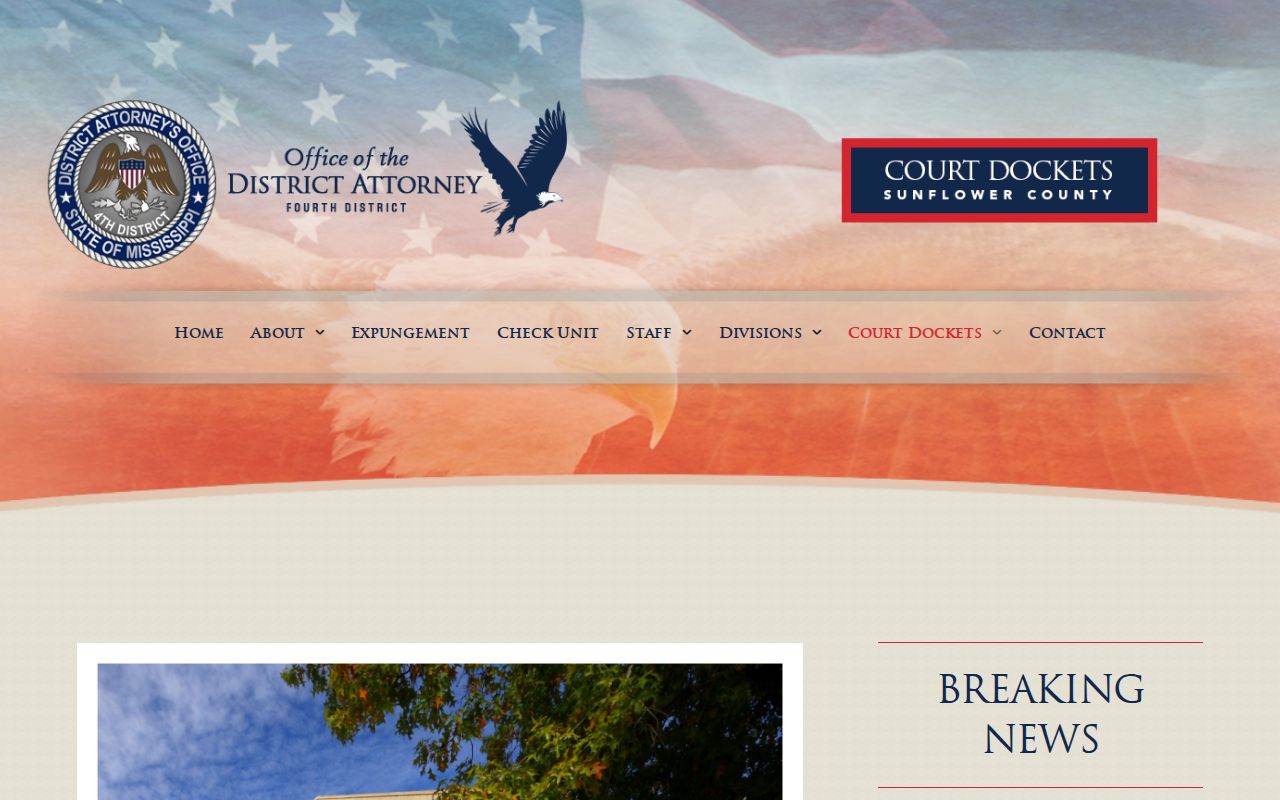
Calendar links are only a starting point for a hearing date. The clerk-held docket is the record to request for verified case activity.