
Getting Sunflower County Court Records
Name the court first. Then name the item you need. Circuit civil and criminal files belong to the Circuit Clerk. Chancery files run through the Chancery Clerk, with MEC/PAMEC handling eligible electronic material. Municipal and Justice Court matters stay with the local court itself. Federal cases sit with the Northern District of Mississippi and PACER. The Circuit Clerk posts no web-based search and no online payment, so circuit requests go in writing by email, mail, or in person. A phone call can confirm routing or fees, but it cannot replace the written request the office describes. Making that call first can save a payment from being delayed or returned.
- Identify the court level, case type, approximate date range, and case number if known.
- Specify the exact item, such as a docket sheet, order, judgment, lien record, or complete file, and say whether a plain or certified copy is needed.
- Choose the custodian’s available channel: Circuit Clerk email, mail, or in-person request; registered PAMEC access for eligible Chancery records; direct municipal or Justice Court contact; or PACER for federal cases.
- Ask for a current quote before remitting payment, then retain the request and any receipt.
- If the office cannot locate a record, ask whether the court level, date range, or retention path should be corrected.
A case number makes any request sharper. Without one, a narrowly framed Sunflower County case lookup can point you to the right court before you ask for a copy.
Sunflower County Circuit Request Timing
Need a court record from Sunflower County? The Sunflower County Circuit Clerk is the office to contact. It handles circuit civil and criminal filings, judgments, and liens. Its services instructions note that document fees vary. A request that lacks specifics can trigger a research fee per item. There is no online payment option. Confirm the exact amount and payee before you mail any money.
On timing, the clerk commits to answering a request within 14 business days. That applies when the information is available. If no record turns up, the office will notify you. That statement is about availability, not a guarantee that every copy lands within the window. It also binds only the Circuit Clerk. Chancery, Justice, municipal, and federal offices in Sunflower County keep their own schedules. So ask each one directly about its current turnaround for a docket or case lookup.
The clerk's own homepage lays out the office's identity and its public-service role. That helps set the official office apart from any case-search interface. The official Circuit Clerk homepage is where those details appear.
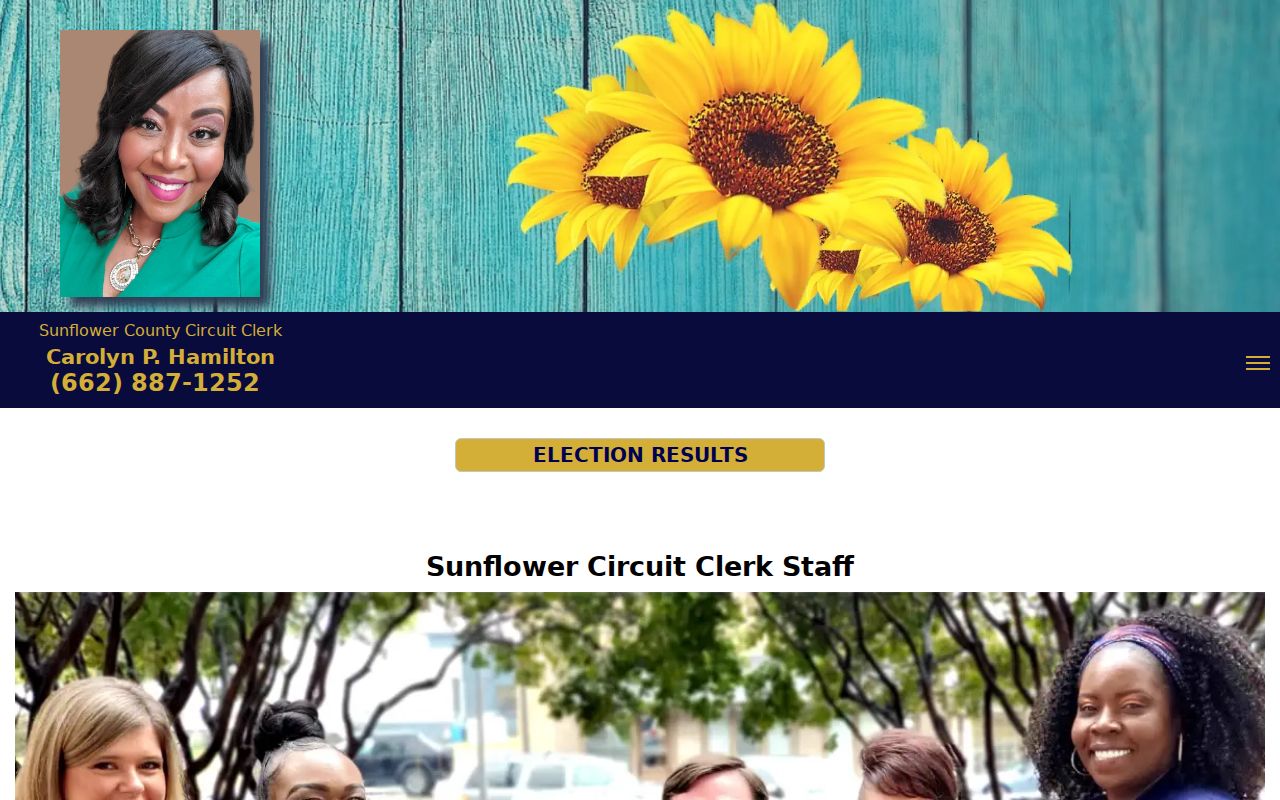
That page is not a substitute for the record itself. A written description is still what lets the clerk locate a Circuit docket or document.
Court Record Types
"Court record" covers several things. A docket sheet is the dated list of case events. An order or judgment is a document the court issued. A full file may hold pleadings, notices, motions, and more, all subject to access limits. Say which item you want. That choice shapes the custodian, the cost, and whether a certified copy makes sense.
- Circuit civil or criminal docket sheets, filings, judgments, and lien records held through the Circuit Clerk.
- Chancery docket sheets, notices, petitions, orders, estate materials, and other case documents held by the Chancery Clerk, with restrictions for sensitive categories.
- Municipal and Justice Court records for local ordinances, misdemeanors, traffic, and lower-court proceedings.
- Federal docket sheets and documents accessed through PACER for Northern District matters.
- Certified copies, which are clerk-certified versions of a specific document rather than a general case search.
Sunflower County Record Custodians
The record type picks the office. County and Chancery sources list 200 Main Street in Indianola as the courthouse address. But one building does not merge two record sets. Circuit and Chancery clerks keep separate files. Municipal and Justice Court records follow their own local clerk route. A Greenville Division federal matter sits outside county custody entirely.
Call before you visit. The Indianola courthouse publishes no full public schedule for counter hours, terminal access, security, or accessibility services. The Chancery Clerk's route is separate for a reason. Ninth Chancery Subdistrict 2 also serves Humphreys and Washington Counties. Name Sunflower County in any chancery request and describe the record with care. Domestic relations, estates, guardianships, land matters, and youth-court routing never become Circuit Clerk files just because the two offices share a courthouse. Wait, they still stay with Chancery. Each office holds only its own cases.
Inside a Sunflower County Court Record
What sits inside a file depends on its court and its access status. PAMEC can make docket sheets, notices, and electronic documents available for nonrestricted matters, though that varies by case. The table below describes record categories rather than promising that every field or document shows up in every case.
| Case number | The court’s identifier, supplied exactly as printed if known. A local numbering format was not published. |
|---|---|
| Docket sheet | A chronological list of filings, settings, and other court events when public access is available. |
| Pleadings and motions | Documents filed by parties, subject to restriction, sealing, or redaction rules. |
| Orders and judgments | Signed court rulings or final decisions requested from the clerk when available. |
| Notices and access status | Electronic notices or docket language may indicate an event even when the underlying document is restricted. |
Sunflower County Electronic Record Access
Ninth Chancery's public CourtInfo page lists court identity, location information, a go-live date, and interface flags. It is not an open case index. Remote case access runs through PAMEC registration. The published non-attorney terms keep that access read-only. A registered user may view electronic documents, docket sheets, and notices in nonrestricted matters. Even a one-page no-match result can trigger the stated page charge. PAMEC's published price is $10 annually for the relevant Attorney or Non-Attorney account type. A search also costs $0.20 for each page it generates. Those charges belong to the electronic system, not to a Circuit Clerk paper request. Federal PACER is separate too. Registration is free, and pages cost $0.10. Most ordinary docket sheets and documents cap at $3. The current PACER pricing page allows a quarterly waiver at $30 or less. Note: The PAMEC non-attorney terms and PACER pricing govern their own electronic access, not local clerk copy fees.
Fees and Certified Copies
A certified copy is a clerk-stamped version of one specific document. It is not the same thing as an ordinary copy or a docket search. Ask for certification only when the receiving court or agency demands it. Be precise about what you need. It might be one order, a docket sheet, a judgment, or the full file. The Sunflower County Circuit Clerk publishes no complete local fee schedule. So the office's current quote governs any request.
| Item | Published amount | Important limit |
|---|---|---|
| Sunflower Circuit record request | Ask the clerk | Fees vary by document type; a vague request may have a research fee. |
| Statutory certification reference | $1 per complete document | A Mississippi Code §25-7-13 reference point, not a posted local quote. |
| Statutory clerk-made copy reference | $1 per page | Confirm applicability and current amount with the clerk. |
| PAMEC remote access | $10 annually; $0.20 per page | Includes a generated no-match page under the terms. |
| PACER electronic access | $0.10 per page | Different federal system; most ordinary documents have a $3 cap. |
The fee statute materials make a decent reference point. They cannot replace the Circuit Clerk's current quote for Sunflower County. The chancery and municipal offices post no complete Sunflower-specific copy schedule.
Sunflower County Older Record Paths
An older Sunflower County court record may take more than an online docket check. Circuit records fall under statutory retention and archival rules. So a file that turns up nowhere electronically may still exist. Ask the clerk or the archives directly instead of assuming it was never filed. Give the office a likely date range, oldest to newest. Add the court level and the most specific document description you can offer.
Chancery's three-county subdistrict adds a second reason for precision. A Ninth Chancery matter might sit in Humphreys, Sunflower, or Washington County. Name Sunflower County in your request. The district label alone does not prove the file belongs in Indianola. And keep the outcomes straight. A retained docket entry, a missing electronic image, and an unavailable record are three different things.
Sealed Records and Public Access
Public access in Mississippi has court-specific limits. The Mississippi Ethics Commission's Public Records Act material covers executive and local public bodies. The judiciary answers to separate policies and its own court sealing rules. A blanket request cannot override a court's restriction. When access is limited, ask the clerk. Let the clerk say which rule governs that particular record.
Access rules to keep in mind:
Mississippi Public Records Act information explains the state’s public-records framework, but court files may be governed by judiciary-specific rules.
PAMEC terms distinguish read-only access to nonrestricted electronic materials from restricted records.
Ninth Chancery calendar instructions state that Sunflower youth-court proceedings are confidential and not open to the public.
Sunflower County Chancery Restrictions
Chancery records span domestic relations, estates, guardianships, land, and equity. Some categories are sensitive by nature. These include child custody or visitation, child support, divorce, modification, paternity, termination of parental rights, birth-certificate correction, and minor settlements. A public docket sheet can list case activity. But the underlying document may stay off remote access. Probate and guardianship files may also hold financial, medical, or protected-person information.
A restricted result goes to the Chancery Clerk for the applicable access process. Do not call it a nonexistent file. Youth Court is confidential. A sealed record can leave a docket entry with no viewable document behind it. Redactions and court orders can trim a public copy further still.